
Beginner Guide to Comic Book Collecting: Where Do You Start?
Quick Summary
Beginner comic book collecting starts with choosing a favorite character or genre you already enjoy, rather than buying everything on the rack. Set a focus and a realistic monthly budget, read a few issues before buying speculatively, and protect what you own from light, humidity and handling.
- Pick a character or genre you already enjoy, since it gives you a built-in reading thread.
- Write down one or two collecting goals, such as a single character or one publisher.
- Budget reading copies, supplies and speculative issues as separate line items.
- Read a few issues in order before buying any speculative key issue.
- Check seller photos at the highest resolution available before buying a key issue.
Table of Contents
- Choosing What to Collect: Series, Characters and Publishers
- Setting a Collecting Focus and a Realistic Budget
- Best Comic Books for Beginners to Start With
- Understanding Key Issues, First Appearances and Market Value
- Comic Book Grading for Beginners: Reading Condition Without Overpaying
- Comic Book Collecting Supplies and Where to Buy Them
- Comic Book Storage and Protection: Keeping Your Collection in Top Condition
- Start Your First Pull List With Luna-Tech Comics
- Frequently Asked Questions
Choosing What to Collect: Series, Characters and Publishers
Most new collectors fail for one simple reason: they buy everything that looks good on a rack. A focused beginner guide to comic book collecting starts with a decision about what you actually love, because that decision shapes every purchase after it. At Luna-Tech Comics, we have been reading comic books for over 50 years, and the collectors who stay engaged are often the ones who began with a clear favorite.
Start by asking what you already read, watch or enjoy. A character from a film, a cartoon or a video game is a reliable anchor. The major publishers, Marvel Comics catalog and DC Comics catalog, each offer long-running series with decades of issues, so you can browse by character as easily as by title.
Picking a Favorite Character or Genre
A character gives you a built-in reading thread. Superhero, horror, science fiction and war titles all have distinct tones, so pick the genre that fits your mood before picking the book. Browse the [PAGE_LINK_1] to see which series and characters are available, then narrow to two or three that appeal to you.
Deciding Where to Begin Reading
Once you have a character, decide where to start. Older runs can feel dense, and jumping into the middle of a decades-long story is confusing. A common approach is to start at a recent relaunch or a complete storyline, then work backward into back issues. Read a few issues in order before buying anything speculative.
Setting a Collecting Focus and a Realistic Budget
Without a focus, a collection turns into a pile. Write down one or two goals: a single character, one publisher, a specific era, or a short list of key issues. A tight focus makes it obvious when a purchase fits and when it does not.
Budget next. Set a monthly figure you can sustain, and treat single issues, graphic novels and supplies as separate line items. A starter plan might allocate the bulk of the budget to reading copies and a smaller slice to protective supplies, so you are never forced to choose between preserving what you own and adding to it. Many collectors find that a modest, regular budget builds a stronger collection than occasional large splurges.
Best Comic Books for Beginners to Start With
The best comic books for beginners are accessible, affordable and easy to follow without prior knowledge. Look for complete storylines, self-contained issues and titles with a clear entry point. Collectibles also make good first purchases when they connect to a character you already like.
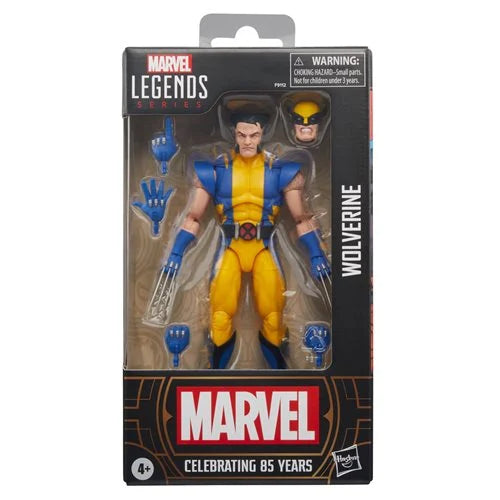
A strong starter option is the DC Direct First Appearance Series 4 Martian Manhunter Action Figure MIP, which ties a collectible directly to a classic character. For a low-commitment first buy, the 1st Issue Special 13 gives you an approachable entry into a classic series without a large outlay. Our general advice is to test your interest with one or two inexpensive issues before committing to a longer run.
Understanding Key Issues, First Appearances and Market Value
A key issue is a comic that stands out because of a first appearance, a significant event or a major creative contribution. First appearances of popular characters are the most sought after, and they often command higher prices than other issues in the same series.
Value depends on demand, rarity and condition, and it changes over time, so treat any price as a snapshot. A concrete example is the Detective Comics 1000 Jim Lee Variant Cover CGC SS 8.5, where the grade and the variant both shape what a buyer pays. Before buying any key issue, check the seller's pictures at the highest resolution available and request more if the ones provided are not enough.
Comic Book Grading for Beginners: Reading Condition Without Overpaying
Grading describes a comic's physical condition, and it is the single biggest factor in a key issue's price. Beginners often assume a grade is a simple verdict, but grades reflect specific defects: spine stress, creases, color breaks, staining and corner wear. Learn to spot these before you read a grade label.
The industry uses a 10-point grading scale. The bands that matter most to beginners are:
- 10.0 Gem Mint, virtually flawless, sharp corners, no spine stress. Rare in older books.
- 9.8 Near Mint/Mint, one or two tiny defects at most; the ceiling for most modern raw books.
- 9.4 Near Mint, minor spine stress or a small corner blunting; still presents cleanly.
- 8.0 Very Fine, noticeable but modest wear: a few color-breaking spine ticks, slight edge wear, maybe a light crease that does not break color.
- 6.0 Fine, moderate wear across the cover, some creasing, possible small tears or a reading crease near the spine.
- 4.0 Very Good, heavy read wear, multiple creases, possible small pieces out or a subscription crease.
- 2.0 Good, major defects, heavy creasing, possible detached cover or missing coupon; a reader copy only.
A useful rule of thumb: the jump from 9.4 to 9.8 can multiply a key issue's price several times over, while the jump from 4.0 to 6.0 often moves it far less. That is why sellers chase high grades and why beginners should not pay a premium for a grade they cannot verify.
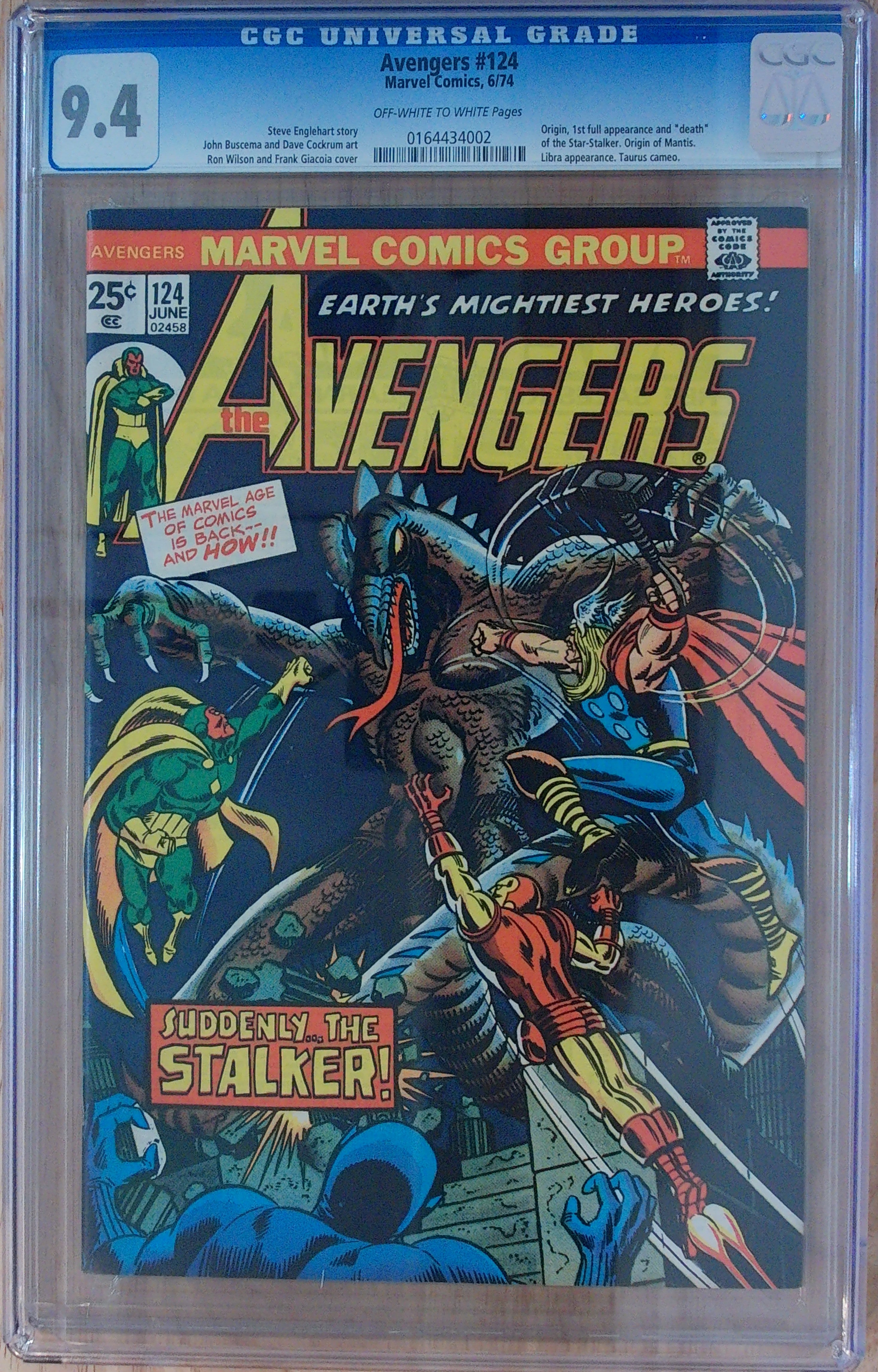
Third-party graded books sealed in protective slabs give you an independent assessment. For example, the Avengers Vol 1 #124 CGC 9.4 shows how a slabbed grade communicates condition at a glance. For raw, ungraded copies, compare photos carefully and ask questions about any defect you cannot see clearly.
When you evaluate a raw book, work through a short checklist: hold it at an angle under good light to catch color-breaking spine ticks; check the corners for blunting or creasing; look along the spine for stress lines and staple pull; inspect the back cover for staining, foxing or moisture ripples; and confirm the centerfold and staples are attached. Ask the seller for close-ups of the spine, all four corners and the back cover, a listing that only shows a flat front scan is hiding the areas where defects live.
Watch out: a high grade on a book you do not need is an expensive mistake. Confirm the grade matches what you are buying before you pay the premium, and remember that a raw book's stated grade is the seller's opinion, not a certified fact.
The grading bands below summarise the condition ranges a beginner is most likely to encounter.
| Grade | Condition summary | Note |
|---|---|---|
| 10.0 Gem Mint | Virtually flawless, sharp corners | Rare in older books |
| 9.8 Near Mint/Mint | One or two tiny defects at most | Ceiling for most modern raw books |
| 9.4 Near Mint | Minor spine stress or small corner blunting | Still presents cleanly |
| 8.0 Very Fine | Modest wear, a few spine ticks | Light crease may not break color |
| 6.0 Fine | Moderate wear, some creasing | Possible small tears |
| 4.0 Very Good | Heavy read wear, multiple creases | Possible pieces missing |
| 2.0 Good | Major defects, heavy creasing | Reader copy only |
Comic Book Collecting Supplies and Where to Buy Them
Protecting your comics starts with the right supplies. Most collectors use archival polypropylene bags, acid-free backing boards and sturdy storage boxes sized to the books. Buy supplies that match your comics' dimensions, since mismatched bags and boards are a common source of spine ticks and bent corners.
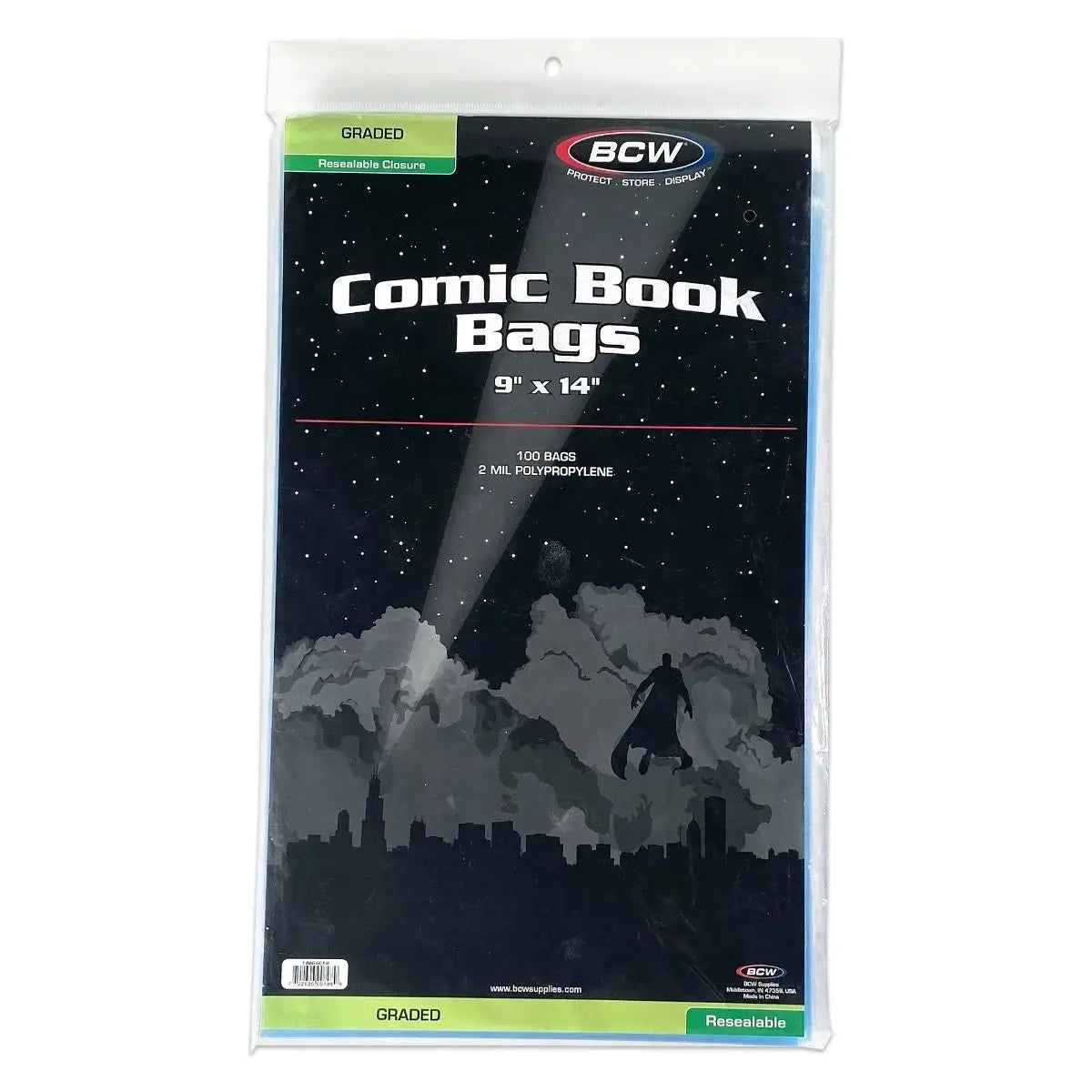
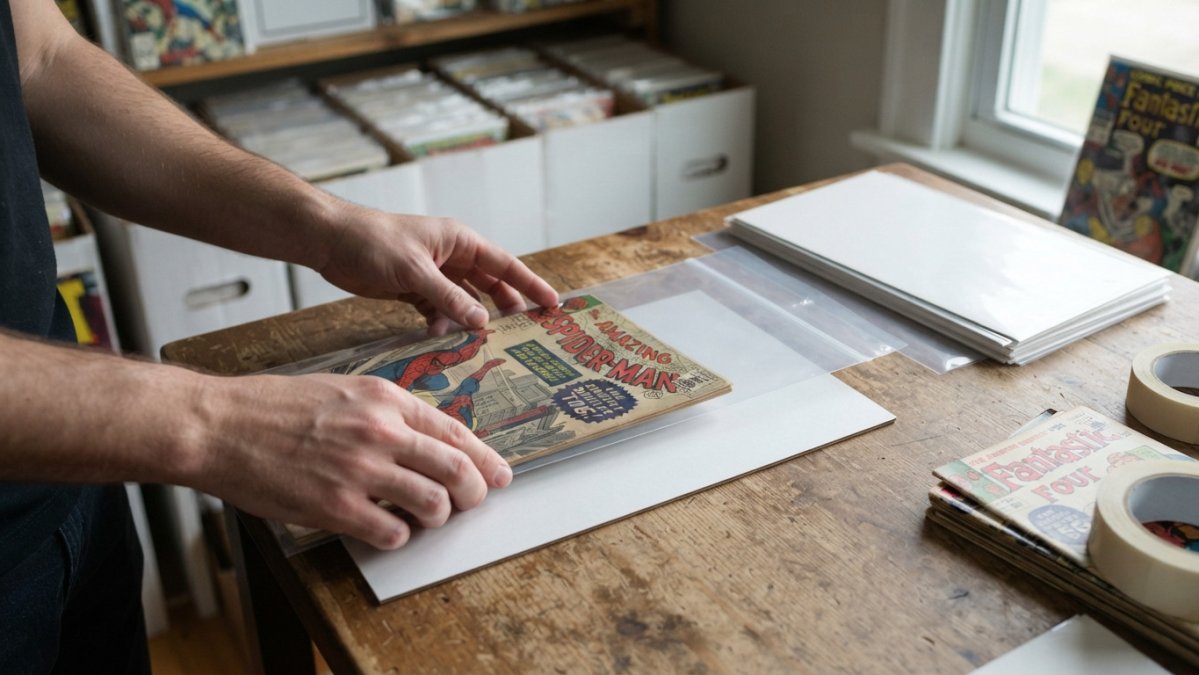
Local comic shops are a place to see supplies in person, while online retailers can offer wider selection. Choose the source that gives you the sizing and quality you need, and check return terms before ordering.
Comic Book Storage and Protection: Keeping Your Collection in Top Condition
Storage conditions matter as much as the supplies you buy. Most long-term damage to a collection comes from four things: light, heat, humidity and handling. Get those under control and even a modest collection will hold its condition for decades.
Light. Ultraviolet light fades inks and yellows paper. Keep boxes and shelves out of direct sun and away from fluorescent fixtures that run for hours. If a book is displayed, use a UV-filtering frame or a slab, and rotate what is on display rather than leaving one book out indefinitely.
Temperature and humidity. Aim for a stable, room-temperature environment, roughly the range you would keep a comfortable living space, and avoid swings. Basements and attics are the usual culprits because they cycle between damp and dry. A simple hygrometer costs little and tells you whether a room is drifting toward the damp range where mold and foxing take hold. If a room runs humid, a small dehumidifier is cheaper than replacing books.
Materials. Use archival polypropylene or polyethylene bags and acid-free backing boards sized to the book. Mylar sleeves cost more but are the standard for books you intend to keep for decades. Avoid PVC sleeves, rubber bands, tape directly on the book, and newspaper or acidic inserts, all of which can stain or transfer acidity over time. Store books upright in boxes sized to the books, not so loose that they slump and not so tight that the spine presses against the box. The same care with fit and pressure matters for graded slabs, where Superior Fit Sleeves can help keep storage protection snug without crowding the book.
Handling. Handle books by the edges with clean, dry hands, and never lay a book open flat or fold the cover back. A cheap pair of cotton gloves is optional, but clean hands and a flat, dry surface are the basics.
Build a simple routine: bag each comic, place it on a backing board, and file it in an appropriately sized box. Keep an inventory list, a spreadsheet or a cataloging app, so you know what you own and where it is stored. Review your collection periodically for signs of moisture, pests or fading, and re-bag books whose sleeves have yellowed or gone brittle. Good preservation keeps your collection's condition intact, which protects its value over the long term.
Watch out: storing books in a garage, basement or attic to save space is the most common way beginners lose condition; a single damp season can cause more damage than years of careful reading.
Start Your First Pull List With Luna-Tech Comics
Your first pull list should reflect the focus you set earlier: one or two series, a realistic budget and a plan for protecting what you buy. Start small, read what you collect, and add titles as your interest grows. Subscribe and save 20% on pre-orders, and sign up for emails to get 10% off to get started with Luna-Tech Comics.
Frequently Asked Questions
Can you provide a beginner's guide to collecting comic books?
Start by choosing a focus: a favorite character, a series or a genre. Then set a monthly budget, read the books you buy, and learn the basics of condition so you know what you are paying for. Keep your books in acid-free bags and boards from the start, since storage mistakes cost more to fix later than they cost to avoid. Luna-Tech Comics offers curated Silver Age and Modern Age issues and supplies that suit this approach, so you can build the collection one deliberate purchase at a time.
What is the best comic book to start with for a beginner?
The best starting point is a series or character you already enjoy from film, TV or games, because you will read it more and collect it longer. For a classic entry point, Giant Size X-Men #1 Facsimile Edition [New Printing] is a reprint of a landmark issue that introduced the all-new X-Men team and is available at a low price. Pair any first purchase with reading order guidance so the story makes sense.
How do you start collecting comic books?
Begin by narrowing your focus to one character, publisher or era so your collection does not sprawl. Visit a local comic shop or browse an online catalog, check the photos closely before buying, and keep a simple list of what you own. Ask sellers for additional photos if the ones shown are not enough. Starting small and staying organized keeps spending under control and makes each addition meaningful.
Should beginners buy graded or ungraded comic books?
Beginners often do well starting with ungraded books in good, readable condition, because they cost less and let you learn the hobby. Graded books, such as the Avengers Vol 1 #124 CGC 9.4 listed at $150.00, carry a third-party condition rating that makes value and quality easier to verify. Buy graded books when the grade matters to your purchase, and check the photos at the highest resolution before paying for any high-grade key issue.
How can you tell whether a comic book is valuable?
Value depends on the issue's importance, its condition and current demand. Key issues, which include first appearances and significant story events, typically command more than standard issues. Check the book's condition against a grading reference, compare recent sale prices, and be cautious of sellers who claim high grades without clear photos. Collecting for enjoyment is a valid goal even when a book has limited resale value.
How should beginners store and protect comic books?
Store each comic in an acid-free polypropylene bag with a rigid backing board, then keep the bags upright in a cool, dry, dark place away from direct sunlight and humidity. Avoid attics and damp basements. Handle books by their edges with clean hands, and never store them in plastic that is not archival grade, since it can degrade the paper over time.
What do you call a person who collects comic books?
A person who collects comic books is usually called a comic book collector, or simply a collector. Enthusiasts who focus on vintage issues may describe themselves as key issue hunters or Silver Age collectors, while readers who collect collected editions and graphic novels are often called trade collectors.
What is the 180 rule in comics?
The 180 rule is a convention in which a comic's artwork keeps characters facing a consistent direction across panels, so readers can follow the action without confusion. Breaking the rule is sometimes used deliberately for effect. Learning it helps beginners read comics more closely and appreciate how artists guide the eye from panel to panel.
